The Real Reason Most Designers Stay Underpaid
There’s no shortage of skilled designers using Chief Architect. The real issue is how that skill is packaged, positioned, and sold.
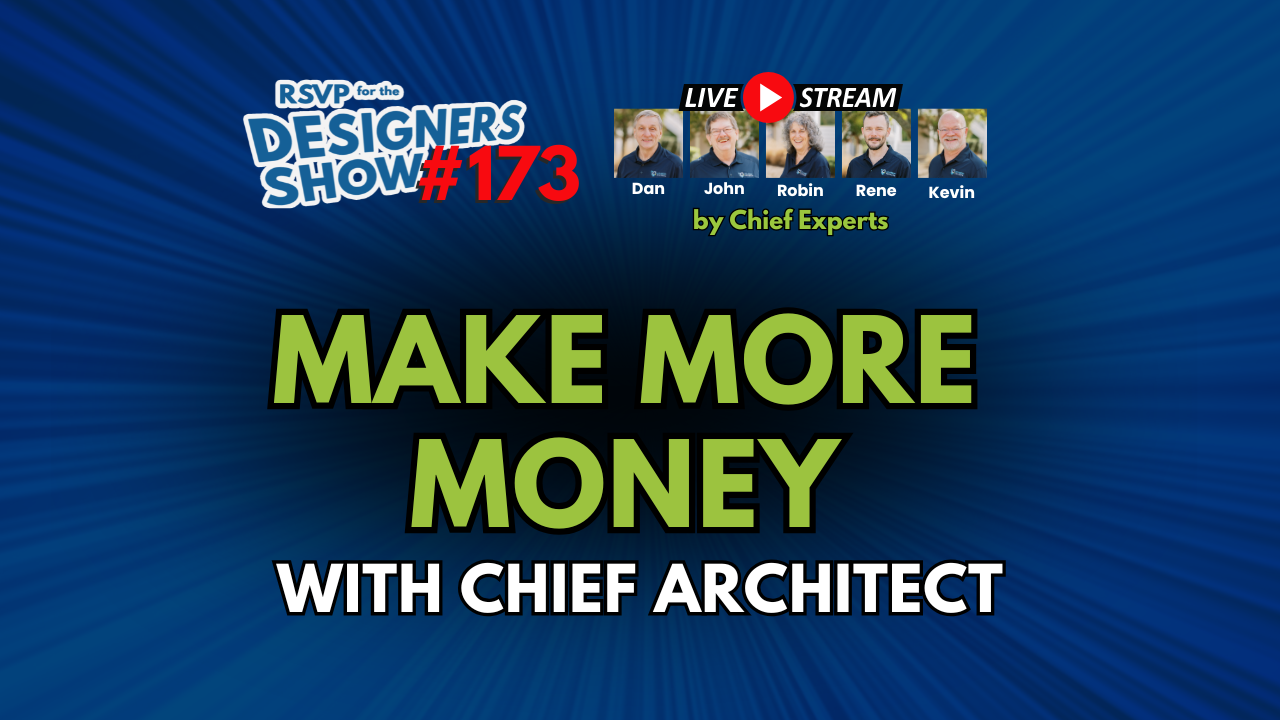
In this episode of The Designers Show, Dan Baumann, John Schrader, Rene Rabbitt, Robin Fisher, and Kevin Transue break down a core truth: most professionals are using a high-value tool inside a low-value business model.
What follows is not incremental advice. It’s a shift in how you think about:
- Revenue
- Client control
- Service structure
The outcome is simple: more profit per project without needing more projects.
Workflow Efficiency: Where Profit Is Won or Lost
Front-Load Decisions or Pay for Them Later
Dan Baumann and John Schrader make this clear—traditional workflows push critical decisions too late.
That creates:
- Endless revisions
- Scope creep
- Compressed margins
Instead, high performers:
- Use Chief Architect early
- Make decisions in real time
- Reduce downstream friction
“Late decisions are where profit disappears.”
Technical Leverage: Build Faster, Show Better
Rene Rabbitt reinforces that efficiency is not about working harder—it’s about systemizing your setup.
Key upgrades:
- Pre-built templates for repeat projects
- Smart layer and view management
- Fast rendering for client interaction
The goal isn’t just speed. It’s control over the process.
Client Psychology: Control the Process or Lose Margin
Most Designers Give Away the Most Valuable Part
Across the panel, there’s alignment: designers undercharge because they give away thinking.
John Schrader and Dan Baumann highlight:
- Free early-stage design work
- Undefined revision cycles
- Weak boundaries
Replace Passive Feedback with Guided Decisions
Robin Fisher and Kevin Transue anchor this in professional practice.
Instead of:
- Waiting for client feedback
You:
- Lead structured decisions
- Present clear options
- Move forward in real time
“Clients don’t want more choices. They want clarity.”
Monetization Strategy: Where the Real Opportunity Lives
This is where Dan explicitly expands the conversation—and where the referenced framework comes in.
Rather than thinking in terms of “drawing plans,” the opportunity is much broader.
There are a lot more ways to make money with Chief before, during, and after the plan set.
How to Make Money with Chief Architect
- Measuring and As-Built Services
Many remodelers, designers, and homeowners need accurate existing conditions before anything else can happen.
Services you can offer:
- Field measuring
- As-built floor plans
- Existing exterior elevations
- Existing roof plans
- Existing electrical/plumbing fixture locations
- Existing room-by-room photos tied to the plan
- Lidar scan cleanup and conversion into Chief
- Creating existing/demo/new plan sets for remodelers
- Turning hand sketches or old blueprints into usable Chief plans
This is one of the easiest entry points, since many contractors hate doing it.
- Concept Design Services
This is where Chief really shines because clients can see ideas quickly.
Services you can offer:
- Floor plan options
- Kitchen remodel layouts
- Bath remodel layouts
- Basement finish concepts
- Addition options
- Garage/add-on studies
- Outdoor living concepts
- Before-and-after design studies
- “What if we remove this wall?” studies
- Space planning for better flow
This can be sold as a fixed-price design package before the full set of construction drawings is available.
- 3D Visualization and Renderings
Many clients cannot read plans. They need pictures.
Services you can offer:
- Interior renderings
- Exterior renderings
- Kitchen and bath 3D views
- Cabinet layout previews
- Material and color studies
- Lighting studies
- Furniture layout studies
- Walkthrough videos
- Existing vs. proposed renderings
- Realtor/developer marketing images
This is a great add-on because it helps people make decisions faster.
- Product Selection Help
This can save clients and contractors a ton of time.
Services you can offer:
- Cabinet selections
- Countertop options
- Flooring layouts and materials
- Tile layouts
- Plumbing fixture selections
- Lighting fixture selections
- Door and window selections
- Siding/roofing/exterior material studies
- Appliance layout coordination
- Finish schedules
This is where design starts turning into real construction decisions.
- Cabinet and Interior Layout Services
Chief is strong here, especially for kitchens, baths, mudrooms, offices, and built-ins.
Services you can offer:
- Kitchen cabinet plans
- Bath vanity layouts
- Built-in bookcases
- Fireplace walls
- Mudroom lockers
- Laundry room cabinets
- Pantry designs
- Closet layouts
- Home office layouts
- Cabinet elevations and schedules
This could be sold directly to homeowners, remodelers, cabinet shops, or interior designers.
- Construction Drawing Services
This is the obvious one, but there are many ways to package it.
Services you can offer:
- Permit drawings
- Builder plan sets
- Remodel drawings
- Addition drawings
- Deck plans
- Garage plans
- Basement finish plans
- Light commercial tenant improvement plans
- ADA layout coordination
- Simple code review drawings
The key is not just “drawing plans,” but helping contractors get jobs sold, permitted, and built.
- Structural Communication Drawings
You do not have to be an engineer to help everyone understand the structure.
Services you can offer:
- Framing plans
- Beam location plans
- Floor framing layouts
- Roof framing studies
- 3D framing views
- Truss coordination drawings
- Bearing wall studies
- Foundation layout coordination
- Foundation wall and footing diagrams
- Structural notes coordination with the engineer
These drawings can reduce confusion between the contractor, engineer, framer, and homeowner.
- Site Planning and Terrain Work
This is a big opportunity because a lot of designers avoid site work.
Services you can offer:
- Plot plans
- Site plans
- Setback studies
- Driveway layouts
- Garage placement studies
- Walkout basement studies
- Terrain modeling
- Grade studies
- Retaining wall concepts
- Deck/patio/landscape integration
Chief can help clients understand how the building sits on the land.
- Remodeling Strategy Plans
This is different than just drawing a remodel.
Services you can offer:
- Phasing plans
- Demo plans
- Temporary kitchen/living plans
- “Live in the house during construction” planning
- Budget option plans
- Good/better/best remodel options
- Scope-of-work drawings
- Contractor bidding plans
- Design-build sales packages
This helps remodelers sell projects and control scope.
- Sales and Presentation Packages
Contractors need help selling projects, not just building them.
Services you can offer:
- Client presentation drawings
- 3D sales packages
- Before-and-after slides
- Project proposal graphics
- Design option boards
- Renderings for estimate meetings
- Walkthrough videos for sales calls
- Simple plan books for homeowners
- High-end presentation PDFs
- “Here’s what you’re buying” visuals
This is a great way to make a design a profit center.
- Estimating and Material Support
Chief can support estimating, even if it is not the final estimating tool.
Services you can offer:
- Cabinet counts
- Door and window schedules
- Fixture schedules
- Flooring area takeoffs
- Siding area takeoffs
- Roofing area takeoffs
- Wall surface area takeoffs
- Room finish schedules
- Material list cleanup
- Exporting data for estimating software
The service here is not “Chief does it perfectly.” The service helps organize the project information.
- Template, Library, and Workflow Setup
This is a great service for Chief users and design-build companies.
Services you can offer:
- Chief template setup
- Layer set cleanup
- Plan view setup
- Layout template setup
- Annotation set cleanup
- CAD detail library setup
- Custom title blocks
- Custom toolbars and hotkeys
- Custom schedules
- Company standard plan sets
- Symbol and material library setup
This can be sold as a high-value business efficiency service.
- Training and Coaching
Many people have Chief but do not know how to use it effectively.
Services you can offer:
- One-on-one Chief coaching
- Small team training
- Company workflow training
- New employee onboarding
- Template training
- Remodel workflow training
- Roof training
- Layout training
- Rendering training
- “How to finish a plan set” training
This works well because many companies do not need another drafter. They need their current team to get faster.
- Outsourced Chief Drafting Support
Many contractors and designers need help during busy times.
Services you can offer:
- Overflow drafting
- Redline cleanup
- Converting sketches to plans
- Layout sheet setup
- Drawing corrections
- Plan revisions
- Permit revision help
- Creating details
- Cleaning up messy Chief files
- Taking a project from concept to CDs
This can be hourly, project-based, or retainer-based.
- Interior Design Support
Interior designers often need help turning ideas into buildable drawings.
Services you can offer:
- Furniture plans
- Reflected ceiling plans
- Lighting layouts
- Wall treatment layouts
- Tile elevations
- Cabinet elevations
- Finish schedules
- 3D room views
- Material studies
- Designer-to-contractor drawing packages
This is a great niche because many interior designers are strong creatively but do not want to produce construction drawings.
- Real Estate and Pre-Purchase Services
Clients often want to know what is possible before they buy.
Services you can offer:
- “Can this house be remodeled?” studies
- Addition of feasibility studies
- Finishing Basement studies
- Garage feasibility studies
- ADU/in-law suite concepts
- Before-you-buy remodeling ideas
- Quick floor plan redraws from listing plans
- Remodel cost discussion drawings
- Lot fit studies
- Investment property layout options
This can be a smaller, fast-turnaround service.
- Light Commercial Services
Chief can work well for many smaller commercial projects.
Services you can offer:
- Small office layouts
- Retail layouts
- Tenant improvement plans
- Reception area designs
- Breakroom layouts
- Small restaurant concepts
- Salon/spa layouts
- Medical office layout concepts
- ADA restroom layout coordination
- Finish plans and schedules
You may still need engineers or code consultants, but Chief can be great for planning and presentation.
- Outdoor Living and Accessory Structures
This is a big growth area.
Services you can offer:
- Deck designs
- Screen porch designs
- Covered patio designs
- Outdoor kitchens
- Pool house concepts
- Detached garages
- Workshops
- Guest houses
- Pergolas and trellises
- Backyard entertainment layouts
These are often easier projects to sell because people can get emotionally excited about them.
- Problem-Solving and Plan Rescue
This is a sneaky good service.
Services you can offer:
- Fixing bad Chief files
- Cleaning up messy plans
- Solving roof problems
- Solving stair problems
- Fixing wall layer issues
- Cleaning up layout files
- Reworking a plan that is not buildable
- Finding why dimensions are wrong
- Helping a contractor understand someone else’s plan
- Turning a half-finished file into a finished project
A lot of people will gladly pay to get unstuck.
- Specialty Drawing Packages
These can be smaller paid products or add-ons.
Services you can offer:
- Deck permit package
- Basement finish package
- Garage package
- Kitchen remodel package
- Bath remodel package
- Porch package
- Cabinet package
- Site plan package
- As-built package
- Rendering-only package
This makes it easier to sell because the client knows exactly what they are buying.
“The money is not just in drawing plans. The money is in solving problems, helping people make decisions, and giving contractors, designers, and homeowners the information they need to move forward.”
Then break the services into 5 simple buckets:
- Measure it
- Model it
- Visualize it
- Document it
- Help them build or sell it
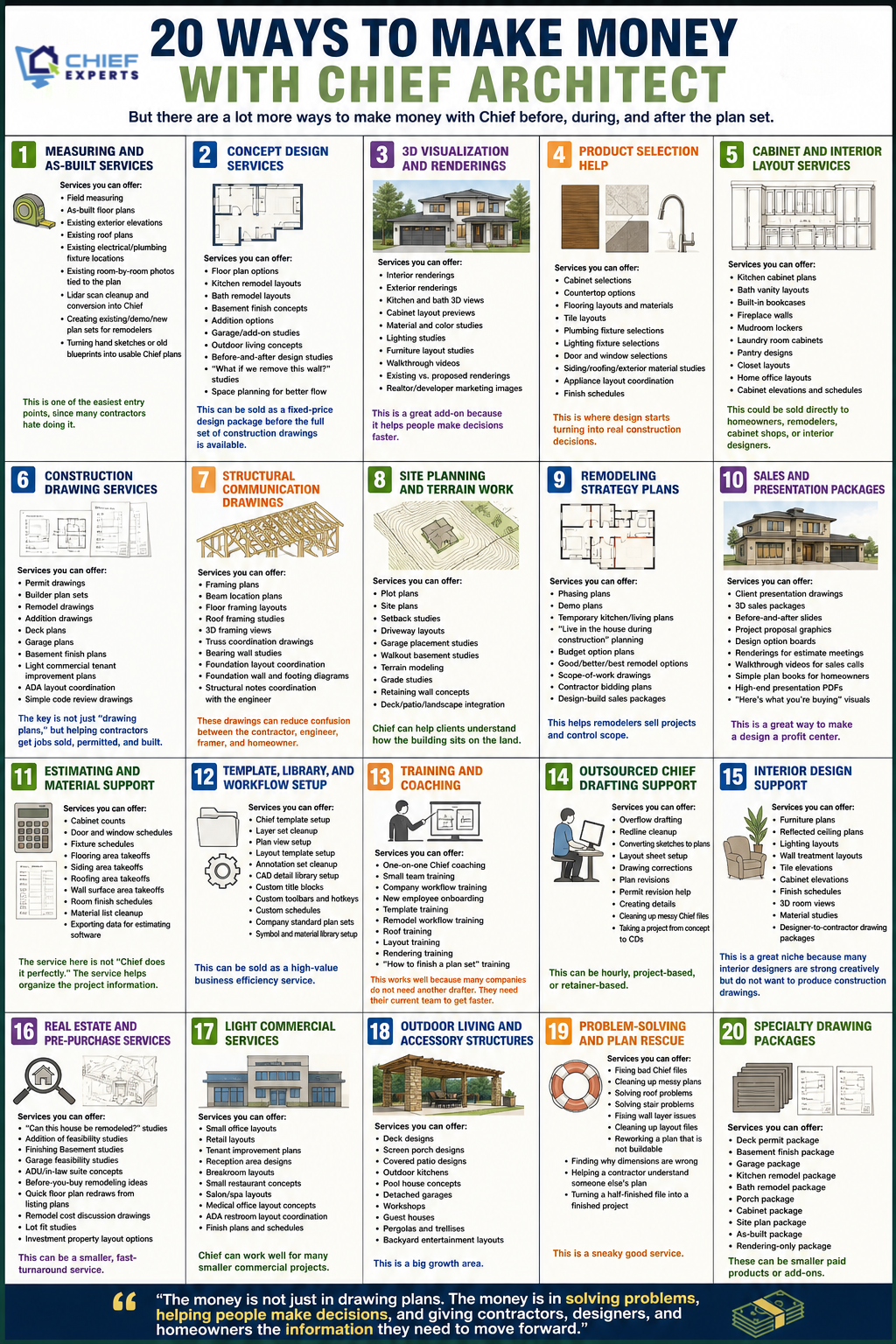
Don’t price Chief Architect services like “drafting.” Price them like problem-solving, decision-making, and project-moving-forward services.
Marketwise, residential drafting services typically range from $75–$150/hour or $1–$3/sq. ft. ft., while residential architectural services are often much higher, around $100–$250/hour or a percentage of construction cost. That gives Chief users a reasonable price point between “cheap drafting help” and full architectural services.
Simple Hourly Rate Ranges
For the show, I’d explain it like this:
|
Skill / Service Level |
Typical Rate |
|
Entry-level drafting help |
$40–$65/hr |
|
Competent Chief drafting/modeling |
$75–$110/hr |
|
Experienced Chief Designer |
$110–$150/hr |
|
Specialist/trainer / workflow expert |
$150–$250/hr |
|
High-level consulting or urgent rescue work |
$200–$300+/hr |
My opinion: a good Chief user should not be charging $25–$35/hour. That’s employee-wage thinking, not business-owner pricing.
Pricing by Service Type
- Measuring and As-Built Plans
Good service because every remodel needs this.
Possible pricing:
- Small house/basic floor plan: $500–$1,200
- Remodel-ready as-built model: $1,500–$3,500
- Full as-built package with elevations, roof, electrical, photos: $3,500–$8,000+
- Per sq. ft. pricing: $0.75–$2.50/sq. ft.
As-built pricing sources vary widely, but published ranges commonly land around $0.40–$2.50/sq. ft. for residential-type work, with more complete scan/model packages going higher.
“If you can measure accurately and turn that into a clean Chief model, you’ve solved one of the most annoying parts of remodeling.”
- Concept Design Packages
This is where someone can make good money before construction drawings even start.
Possible pricing:
- Quick layout study: $500–$1,500
- Kitchen/bath/basement concept: $1,000–$3,500
- Addition concept package: $2,500–$7,500
- Whole-house concept design: $5,000–$15,000+
A simple package might include:
- Existing plan
- 1–3 proposed options
- Basic 3D views
- One revision meeting
Better than hourly: sell this as a fixed-fee package.
- 3D Renderings and Visualization
This is a great add-on because homeowners buy what they can see.
Possible pricing:
- Quick Chief camera views: $250–$750
- Better interior/exterior renderings: $750–$1,500 each
- Full rendering package: $1,500–$5,000+
- Walkthrough video: $1,500–$7,500+
Current 3D rendering pricing references commonly show residential still images anywhere from a few hundred dollars to several thousand per image, depending on quality, modeling, revisions, and detail level.
“You’re not selling a picture. You’re helping the client say yes.”
- Product Selection and Finish Help
This could be huge for remodelers and designers.
Possible pricing:
- One-room selection package: $750–$2,500
- Kitchen/bath finish package: $1,500–$5,000
- Whole-house finish coordination: $5,000–$15,000+
- Hourly consulting: $100–$200/hr
Interior design pricing often runs higher than basic drafting, with common hourly ranges from about $75–$250/hr, and in some markets higher.
Services could include:
- Cabinet style
- Countertops
- Flooring
- Tile
- Plumbing fixtures
- Lighting
- Door/window choices
- Exterior color/material options
- Cabinet Layouts and Interior Elevations
This is one of the easiest things to sell because cabinets are expensive and mistakes are painful.
Possible pricing:
- Small vanity/built-in: $300–$750
- Laundry/mudroom: $750–$1,500
- Kitchen cabinet layout: $1,500–$4,500
- Full cabinet package with elevations/schedules: $3,500–$8,000+
This could be sold to:
- Homeowners
- Remodelers
- Cabinet shops
- Interior designers
- Builders
- Construction Drawing Packages
This is the classic one.
Possible pricing:
- Deck/porch/garage package: $1,500–$5,000
- Basement finish permit set: $1,500–$4,500
- Kitchen/bath remodel drawings: $1,500–$6,000
- Addition plans: $4,000–$15,000+
- Custom home plan set: $8,000–$30,000+
Per square foot:
- Simple drafting: $1–$3/sq. ft.
- Better design/drawing package: $3–$6/sq. ft.
- More complete custom design package: $6–$12+/sq. ft.
This is where scope matters a lot. A “permit set” and a “builder-ready plan set” are not the same thing.
- Site Plans and Terrain Work
Many Chief users avoid this, which makes it valuable.
Possible pricing:
- Simple site plan: $500–$1,500
- Setback/garage placement study: $750–$2,500
- Terrain model with house: $1,500–$5,000
- Complex site/grade/deck/retaining wall study: $3,500–$10,000+
This is a good niche because it combines design, zoning, and construction thinking.
- Plan Rescue / File Cleanup
This is a sneaky-good money maker.
Possible pricing:
- Quick fix session: $150–$500
- Half-day file cleanup: $500–$1,000
- Full plan rescue: $1,500–$5,000+
- Emergency rate: $200–$300/hr
Examples:
- Roof won’t build right
- Layout file is a mess
- Layers are out of control
- Dimensions are wrong
- Someone inherited a bad Chief file
- Permit comments need fixing fast
“When someone is stuck, the value of getting unstuck is much higher than the time it takes.”
- Template, Library, and Workflow Setup
This is high-value because it saves a company time on every future project.
Possible pricing:
- Basic template cleanup: $1,500–$3,500
- Full company template setup: $3,500–$10,000
- Layout/title block/layer set system: $2,500–$7,500
- Custom schedules/macros/libraries: $1,500–$7,500
- Full company workflow overhaul: $7,500–$25,000+
This should almost never be cheap hourly drafting. This is business improvement.
- Chief Training and Coaching
This is one of the easiest services to package.
Possible pricing:
- One-on-one coaching: $125–$250/hr
- 5-hour package: $600–$1,100
- 10-hour package: $1,100–$2,000
- Small team Zoom training: $1,500–$5,000/day
- In-person company training: $3,500–$10,000/day plus travel
You can also sell:
- Beginner onboarding
- Remodel workflow training
- Roof training
- Layout training
- Rendering training
- Template training
- “Finish the plan set” training
- Sales Presentation Packages for Contractors
This is a great one for remodelers.
Possible pricing:
- Simple project presentation: $500–$1,500
- 3D sales package: $1,500–$5,000
- High-end design-build proposal package: $5,000–$15,000+
Includes:
- Before/after views
- Concept plans
- 3D views
- Scope graphics
- Option comparisons
- Client presentation PDF
“If your drawings help a contractor sell a $200,000 remodel, charging $2,500 for the sales package is not expensive.”
Easy Pricing Packages to Talk About
Here are some simple productized offers:
The As-Built Starter Package
$995–$1,995
- Field measure
- Existing floor plan
- Basic Chief model
- PDF plan
The Remodel Concept Package
$2,500–$5,000
- Existing plan
- Proposed plan
- 3D views
- One revision
- Presentation PDF
The Permit Drawing Package
$3,500–$12,000
- Plans
- Elevations
- Sections
- Basic details
- Layout sheets
- Coordination notes
The 3D Decision Package
$1,500–$4,500
- Key room views
- Exterior views
- Material options
- Client review meeting
The Chief Business Tune-Up
$3,500–$10,000
- Template review
- Layer/plan view cleanup
- Layout setup
- Workflow recommendations
- Team training session
If the service helps someone sell the job, permit the job, build the job, avoid mistakes, or make faster decisions, it has real value. Charge accordingly.
A good pricing mindset:
- Drafting task: $75–$125/hr
- Design/problem-solving: $125–$200/hr
- Business improvement/training: $150–$300/hr
- Fixed packages whenever the scope is clear
- Hourly only when the scope is fuzzy
And one more big one:
Never sell “hours.” Sell the result.
Why do so many people have a hard time charging what they are worth in this industry?
A lot of people are technically good, but they were never taught how to sell the value of what they know.
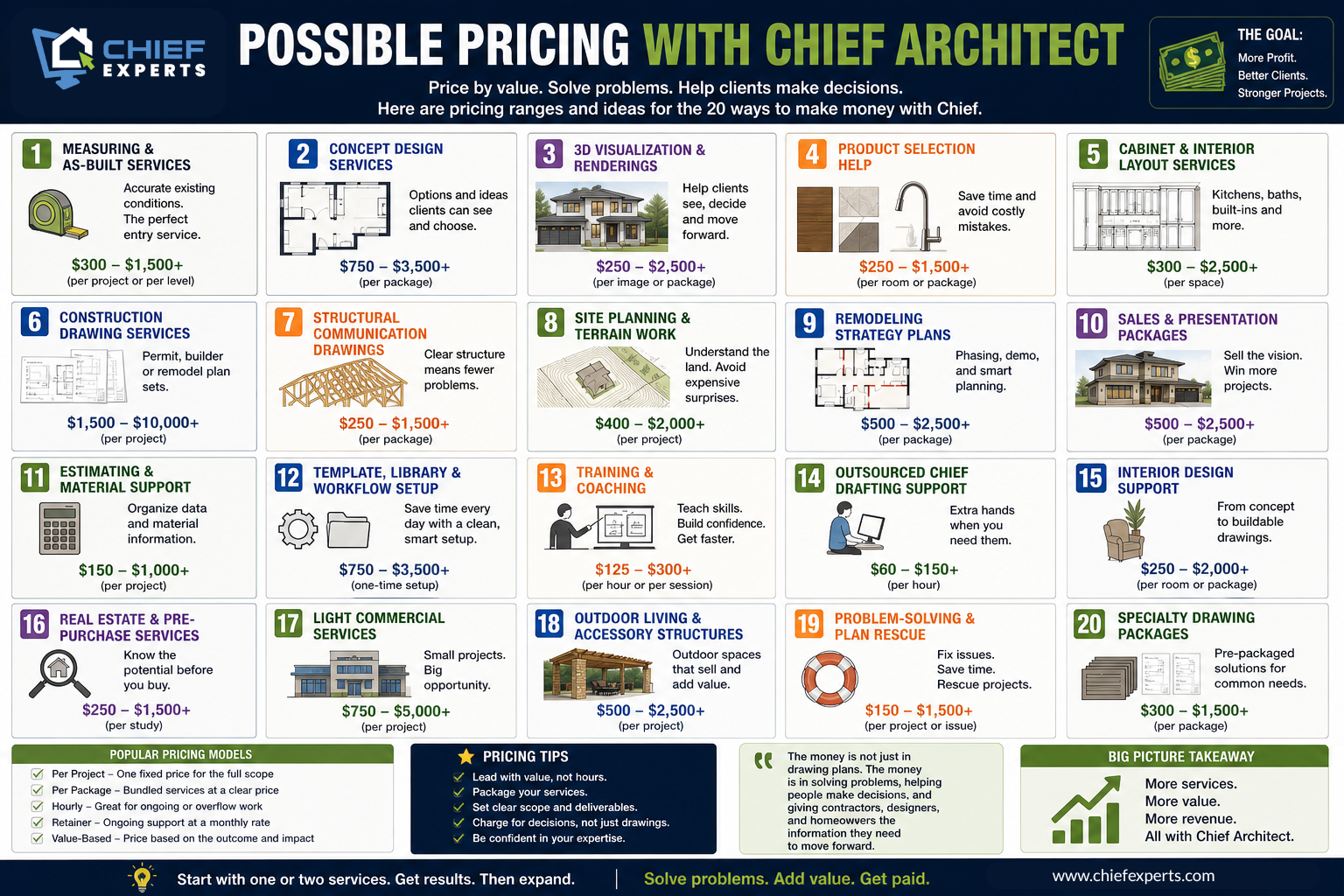
Why people undercharge
- They think they’re selling drawings
They say:
“I’m just drawing plans.”
But the client is really buying:
- Fewer mistakes
- Better decisions
- A clearer scope
- A smoother permit process
- A project that can actually get built
- Confidence before they spend big money
- That’s a much more valuable service than “drawing lines.”
- They compare themselves to low-priced drafters
They see someone online charging $25/hour and think that’s the market.
But that person may not understand:
- Construction
- Codes
- Remodeling conditions
- Structural issues
- Chief Architect workflow
- Builder communication
- Client decision-making
Cheap drafting is not the same as professional design support.
- They are afraid the client will say no
This is probably the big one.
They think:
- “What if they think I’m too expensive?”
- “What if I lose the job?”
- “What if they find someone cheaper?”
But the truth is, some people should say no. Not every prospect is your customer.
A low-paying client can eat up just as much time as a good-paying client — sometimes more.
- They forget about all the unpaid business time
A $75/hour job is not really $75/hour when you include:
- Marketing
- Emails
- Phone calls
- Software
- Insurance
- Training
- Computer equipment
- Revisions
- Bookkeeping
- Downtime
- Problem-solving
Self-employed people often price like employees. That’s a mistake.
- They don’t account for experience
If someone has been in the field for 10, 20, or 30 years, they are not just charging for today’s work.
They are charging for:
- The mistakes they know how to avoid
- The questions they know to ask
- The shortcuts they know
- The problems they can spot early
- The judgment they bring to the project
That experience has value.
- They want to be helpful
A lot of good designers and contractors are nice people.
They want to help. They don’t want to feel greedy. They don’t want to make someone uncomfortable.
But charging properly is not greed.
Charging properly allows you to:
- Stay in business
- Do better work
- Buy better tools
- Keep learning
- Serve better clients
- Not resenting the project halfway through
- They price before defining the scope
This causes trouble.
A client says, “Can you draw up a quick plan?”
Then “quick” turns into:
- Three design options
- Six revisions
- A zoning issue
- Structural questions
- Cabinet layouts
- Renderings
- Permit corrections
The mistake is giving a price before defining what is included.
“Most people don’t have a pricing problem. They have a value problem. They don’t fully understand the value they’re bringing to the project, so they accidentally price themselves like a pair of hands instead of a problem solver.”
That’s the money line.
Better pricing mindset
Instead of saying:
“I charge $85/hour to draw plans.”
Say:
“I help homeowners and contractors turn ideas into clear, buildable plans so they can make decisions, get pricing, get permits, and move the project forward.”
That sounds completely different.
Simple rule
If your work helps someone:
- Sell the job
- Avoid a mistake
- Get a permit
- Make a decision
- Save time
- Reduce confusion
- Build with fewer surprises
Then your work has real value.
And you should charge like it.
Why People Have a Hard Time Charging What They’re Worth
- They think they are “just drawing plans.”
- They don’t see the full value they bring to the project
- They compare themselves to cheap drafting services
- They are afraid the client will say no
- They want to be helpful and not seem greedy
- They price like an employee, not a business owner
- They forget about unpaid time:
- Emails
- Meetings
- Revisions
- Software
- Training
- Bookkeeping
- Marketing
- They don’t account for years of experience
- They don’t define the scope clearly enough
- They let “quick little changes” become free work
- They underprice because they lack confidence
- They don’t explain the value of good drawings and good decisions
- They forget that bad plans can cost thousands of dollars later
- They charge for time instead of outcomes
- They don’t have clear packages or pricing rules
- They take on the wrong clients
- They are afraid of losing the job instead of being afraid of losing money
Simple Reminder
- You are not selling drawings
- You are selling clarity
- You are making better decisions
- You are making fewer mistakes
- You are selling a smoother project
- You are selling confidence before construction starts
Ways to Make Money with Chief Architect
- Measuring existing homes
- Creating as-built plans
- Turning old blueprints into Chief plans
- Creating remodel concept plans
- Creating additional concept plans
- Kitchen layout design
- Bath layout design
- Basement finish plans
- Garage plans
- Deck and porch plans
- Outdoor living designs
- Detached buildings and workshops
- Cabinet layouts
- Built-in cabinet designs
- Interior elevations
- Tile layout drawings
- Product and finish selections
- Door and window schedules
- Lighting layout plans
- Electrical layout plans
- Reflected ceiling plans
- 3D interior views
- 3D Exterior Views
- Realistic renderings
- Walkthrough videos
- Before-and-after design studies
- Site plans
- Setback studies
- Terrain modeling
- Driveway layout studies
- Retaining wall concepts
- Framing plans
- Roof framing studies
- Foundation plans
- Structural coordination drawings
- Permit drawing packages
- Builder-ready construction drawings
- Contractor sales presentation packages
- Homeowner decision-making packages
- Material takeoffs
- Cabinet schedules
- Door and window schedules
- Finish schedules
- Scope-of-work drawings
- Phasing plans for remodels
- Plan revisions
- Permit correction drawings
- Cleaning up messy Chief files
- Fixing roof problems
- Fixing layout and layer problems
- Template setup for other Chief users
- Custom title blocks and layout files
- Custom libraries
- Custom toolbars and hotkeys
- Chief Architect coaching
- Small team training
- Company workflow training
- Overflow drafting support
- Design support for remodelers
- Design support for builders
- Design support for interior designers
- Light commercial tenant layout plans
- Real estate pre-purchase remodel studies
- “Can this house be remodeled?” studies
- Helping contractors sell bigger, better projects
💡 The Golden Nugget: The Shift That Changes Everything
🔥 CORE INSIGHT
The most profitable designers monetize decision-making early—using structured, paid sessions with Chief Architect to eliminate revisions and accelerate client commitment.
This is the inflection point.
Instead of:
- Free design → delayed decisions → low margins
You move to:
- Paid sessions → fast clarity → higher-value projects
The panel repeatedly reinforces this:
you are currently doing your highest-value work for free.
What to Change This Week
Immediate Moves
- Introduce a paid design session
- Use Chief Architect live during that session
- Stop offering open-ended revisions
Next-Level Adjustments
- Build fixed-price packages
- Define scope before pricing
- Align pricing with outcomes, not hours
The Big Win
When you apply this model:
- Projects move faster
- Clients decide sooner
- Your revenue per project increases
You stop operating as a drafter and start operating as a design authority.
Learn This the Right Way
We will be in Denver, CO for Chief Architect Live Training (May 15–18, 2026).
This is intentionally a small group format:
- Direct access to Dan Baumann
- Hands-on implementation—not passive learning
- Real feedback on your workflow and pricing
Large events give you ideas.
Small groups change how you actually work.
Secure your spot early:
https://www.chiefexperts.com/chief-experts-live-training-denver-co-june-15-18-2026